In the pharmaceutical, cosmetic, and nutraceutical industries, peptides are highly sought after for their exceptional biological activities. However, traditional chemical synthesis methods, such as Solid-Phase Peptide Synthesis (SPPS), are often held back by high production costs and heavy organic solvent pollution. To overcome these bottlenecks, modern peptide factories are rapidly pivoting toward Enzymatic Peptide Synthesis (EPS). This innovative manufacturing approach successfully enables the green, low-carbon, and high-purity mass production of peptides.
1. Green Manufacturing: An Eco-Friendly Revolution Eliminating Toxic Solvents
Traditional chemical synthesis requires vast amounts of hazardous reagents like Dimethylformamide (DMF) and Trifluoroacetic Acid (TFA), leading to exorbitant wastewater treatment costs.
In contrast, enzymatic synthesis shifts the reaction environment into aqueous phases or mild bio-mediums. By utilizing highly specific enzymes as biocatalysts, the reactions occur under mild conditions—typically at ambient temperature, standard pressure, and near-neutral pH. This not only drastically reduces energy consumption but also cuts hazardous waste emissions by over 80%, fully aligning with global green manufacturing and sustainable development standards.
2. Targeted Catalysis: Precision Engineering for Ultra-High Purity
The purity of a peptide directly dictates its safety and efficacy. Chemical synthesis is prone to generating racemization byproducts and truncated peptides, making downstream purification notoriously difficult.
The core advantage of enzymatic synthesis lies in the exquisite specificity (regioselectivity and stereoselectivity) of enzymes. Advanced peptide factories utilize directed evolution technologies to screen and engineer specific enzymes that precisely recognize amino acid side chains, forming peptide bonds strictly at the targeted sites. This "lock-and-key" precision catalysis generates virtually no side products, ensuring exceptionally high crude purity during the synthesis phase itself and streamlining downstream purification for consistent mass production.
3. Scalable Mass Production: The Industrial Path to Cost Reduction and Efficiency
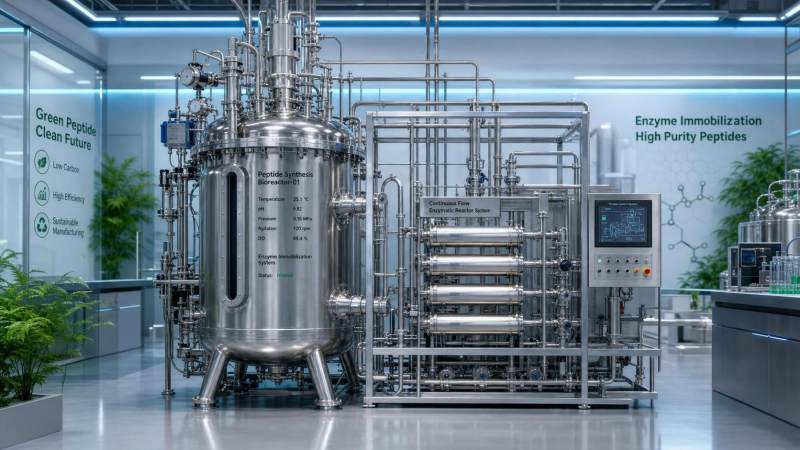
In the past, enzymatic synthesis was constrained by enzyme instability and high substrate costs, limiting its use in large-scale production. Today, leading peptide factories deploy enzyme immobilization technologies, allowing enzymes to be recycled and reused hundreds of times, which significantly drives down production costs. Paired with state-of-the-art continuous flow reactors, peptide synthesis has evolved from single-batch operations to continuous industrial production. This leap in capacity makes premium-grade peptides accessible and commercially viable for the mass market.
Conclusion
Bridging the gap between laboratory innovation and large-scale industrialization, peptide factories utilizing enzymatic synthesis have struck the perfect balance between eco-friendliness and ultimate purity. This represents more than just a manufacturing upgrade—it injects an efficient, safe, and sustainable "peptide" momentum into the global health and wellness industry.